Watch the full video at the end.
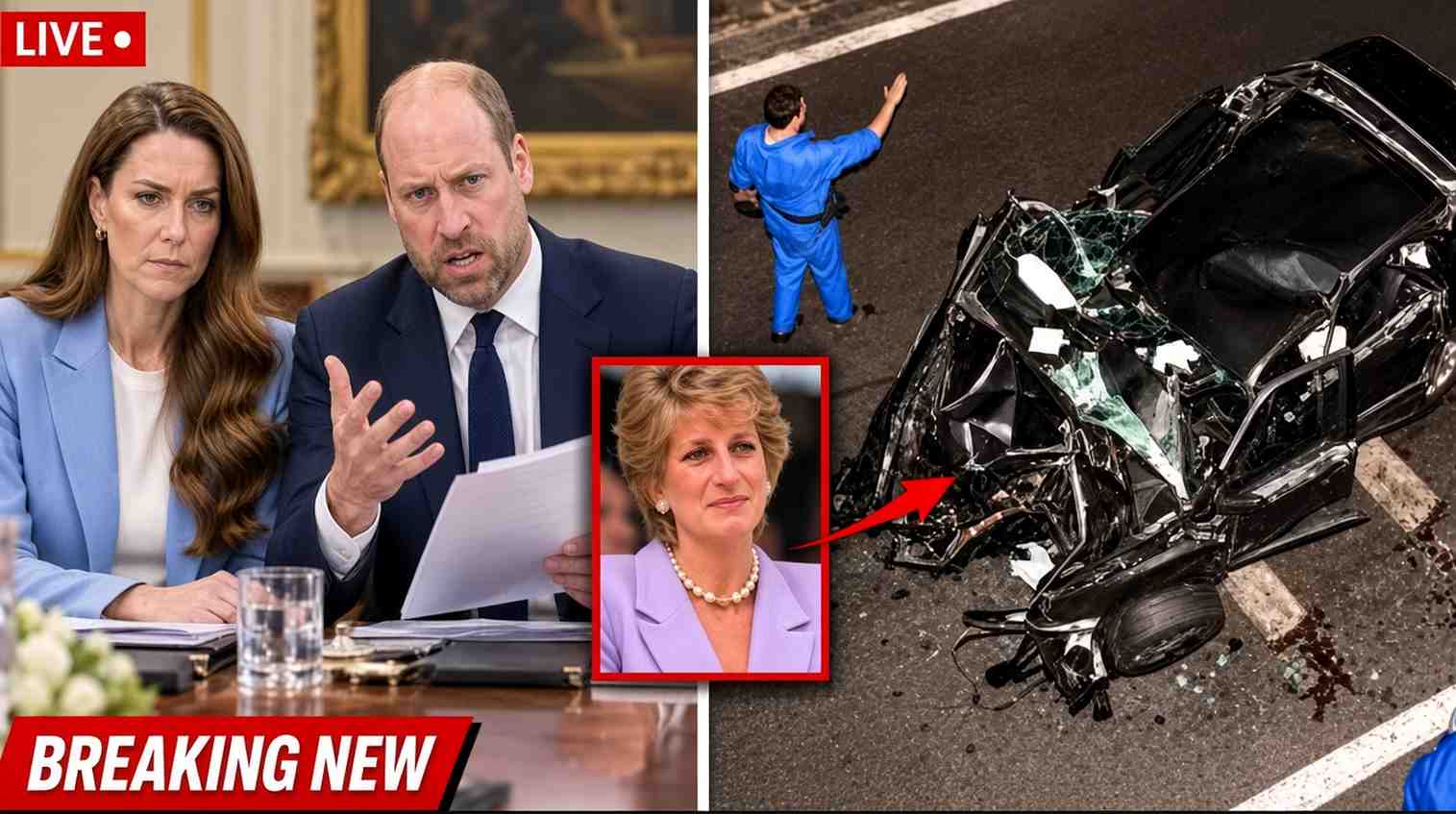
A sensational narrative circulating across digital broadcasting platforms has thrust the British monarchy into an extraordinary speculative storm concerning royal security, internal finances, and the lingering shadow of the late Diana, Princess of Wales. The account centres on an explosive confrontation alleged to have taken place inside the private library of Balmoral Castle between the Prince of Wales, King Charles III, and Queen Camilla.
According to a detailed video broadcast published on YouTube, Prince William reportedly delivered an uncompromising ultimatum to the Queen following an abrupt reassignment of royal protection officers guarding his immediate family. The commentary asserts that precisely forty-two elite protection officers tasked with safeguarding Catherine, Princess of Wales, and the Princess Royal were summarily removed from their posts without standard operational clearance.
Under the framework presented by the video narrative, the security purge would have stripped the Princess of Wales of twenty-four close protection officers at the precise moment Prince George, Princess Charlotte, and Prince Louis prepared for a new school term. The broadcast links this sudden reduction to an alleged private conference held at Clarence House on the morning of 25 September, purportedly convened by Queen Camilla while King Charles took leave from public life for medical convalescence.
During this purported administrative gathering, senior household managers allegedly diverted £2.4 million from royal security budgets toward an independent organisation dedicated to contemporary art conservation. The video segment claims that three pivotal seats on the governing board of this unnamed art foundation were occupied by individuals maintaining close personal ties to the Queen Consort.
Online royal watchers reacted to these assertions with immediate factional intensity across digital comment boards, fiercely debating whether such palace machinations represented credible palace intrigue or entirely manufactured melodrama. Sceptical royal commentators quickly pointed out that operational royal protection within the United Kingdom is strictly administered by the government-level Executive Committee for the Protection of Royalty and Public Figures, commonly known as RAVEC, rather than unilateral domestic reallocations.
Historically, royal funding disputes and civil list renegotiations have occasionally triggered internal friction, yet matters governing personal physical protection have remained firmly under the purview of the Home Office and the Metropolitan Police. The broader cultural significance of the allegation underscores an enduring public fixation on the internal distribution of royal authority during periods when the sovereign faces acute health vulnerabilities.
According to the video, the immediate consequence of the supposed budget reduction fell heavily upon Princess Anne, forcing the Princess Royal to cancel fourteen official engagements across September due to depleted logistics. Rather than lodging a public protest or creating an overt institutional spectacle, the video asserts that Anne adopted an uncharacteristic posture of disciplined silence that was fundamentally misread by palace officials.
Observers dissecting the digital broadcast expressed admiration for Anne’s enduring reputation for stoic resilience, noting that her legendary work ethic would make any curtailment of public duty a monumental household scandal. Mainstream media analysts, however, noted the complete absence of any court circular cancellations or official palace announcements corroborating the sudden abandonment of royal duties on such a sweeping scale.
Throughout royal history, Princess Anne has consistently ranked among the hardest-working members of the royal family, historically managing hundreds of royal engagements annually without operational fanfare or public complaint. The video suggests that Anne’s alleged logistical disenfranchisement acted as the catalyst for an unprecedented alliance between the Princess Royal and her nephew, Prince William.
The narrative claims that the escalating crisis prompted Princess Anne to arrange a clandestine rendezvous with Prince William at nine o’clock on an August evening inside a secluded glasshouse on the Balmoral estate. Departing from conventional palace protocols, no private secretaries, household equerries, or personal protection officers were permitted to attend the nocturnal discussion between the two senior royals.
During this private meeting, Anne reportedly produced an aged brass key bearing the numeric engraving 41222, a physical artefact she had allegedly preserved in total secrecy for twenty-nine years. Digital viewers engaged in widespread speculation regarding the symbolic gravity of such an heirloom, debating whether senior royals would realistically withhold explosive institutional secrets across three decades.
Specialist royal biographers observed that the narrative taps directly into traditional storytelling tropes of hidden royal vaults and generational vendettas passed down through silent family intermediaries. The historical backdrop of the twenty-nine-year timeline deliberately anchors the narrative in the immediate aftermath of Diana’s separation and subsequent divorce from the Prince of Wales in 1996.
The broadcast argues that Anne chose this precise operational juncture to relinquish the key because the contemporary physical safety of Catherine and the three royal children had supposedly become compromised. The video narrative states that on the morning of 28 September, William instructed the head of his personal protection detail to execute an undercover mission to the private banking vaults of Coutts Bank in central London.
Transported in an unmarked black Range Rover without advance press advisories, the security chief purportedly entered the subterranean security repository accompanied solely by a senior bank manager. Inside safe deposit box 42122, an inconsistency in the key numbering that shifts within the video between 41222 and 4122, the officer reportedly recovered an aged moisture-proof pouch containing archival financial ledgers and an analogue cassette tape dated August 1996.
Digital viewers scrutinising the broadcast flooded social channels with technical commentary, raising immediate questions regarding the chain of custody and the legal viability of private royal safe deposit disclosures. Investigative financial reporters frequently note that while Coutts has historically managed the private portfolios of the British aristocracy, access protocols to high-security client vaults remain bound by stringent legal restrictions.
The dramatic device of the Coutts vault deliberately evokes decades of aristocratic financial tradition, contrasting the staid atmosphere of high-end private banking with scandalous allegations of covert intrigue. The broadcast claims that the encrypted digital scans sent directly to William’s office revealed four distinct international wire transactions totalling £450,000 routed through complex intermediary shell companies.
According to the video’s speculative framework, the trail of these historic payments eventually terminated at a numbered private account registered in Geneva, Switzerland. The segment argues that William’s private analytical team constructed a working hypothesis alleging these offshore funds had been deployed to finance freelance paparazzi networks tracking Diana across Europe during the mid-1990s.
Public reaction to the assertion was acutely polarised, with Diana loyalists lamenting the perceived continuation of historical injustices while institutional traditionalists condemned the broadcast for peddling sensationalist historical conspiracy theories. Established diplomatic and media analysts observed that comprehensive inquiries, including the exhaustive Operation Paget investigation led by Lord Stevens, thoroughly investigated financial and security matters surrounding the late princess and found no evidence of institutional surveillance funding.
The lingering historical sensitivity surrounding Diana’s fraught relationship with the media, however, ensures that any claim linking royal funds to invasive press operations immediately strikes an emotional chord with global audiences. The broadcast intensifies its claims by alleging that the uncovered banking records contained formal signature authorisations bearing a striking resemblance to the distinctive handwriting of Charles.
Furthermore, the video narrative purports that critical marginal annotations jotted alongside the figures bore an unmistakable physical similarity to the handwriting of Camilla Parker Bowles. The narrator frames Prince William as staring in utter horror at the documents, agonising over whether his father had knowingly sanctioned the payments or whether third-party courtiers had manipulated sovereign authority.
Commentators on social platforms expressed profound division over these unverified details, with many users cautioning that decades-old signatures cannot be reliably authenticated through scanned smartphone imagery. Legal specialists familiar with document forensic analysis maintain that authenticating historical signatures requires extensive laboratory examination of ink chemistry, paper degradation, and verified comparative samples rather than visual intuition.
Historically, unauthorized palace leaks and forged aristocratic documents have surfaced periodically in British society, demonstrating the perennial vulnerability of high-profile families to documentary fabrication. The video argues that the discovery of the August 1996 cassette recording provoked William’s deepest emotional turmoil, arriving exactly one year prior to Diana’s fatal automobile collision in the Pont de l’Alma tunnel.
According to the unconfirmed narrative, digitized sound files retrieved from the magnetic tape captured voices purportedly resembling Camilla and unidentified intermediaries discussing travel itineraries, daily schedules, and covert financial settlements. The broadcast readily admits that the fidelity of the vintage recording remains degraded and legally unverified, leaving open the distinct possibility of misattribution, technological manipulation, or misinterpretation.
Audiences responding to the audio revelations argued passionately in comment threads, debating whether modern artificial intelligence could easily be used to simulate royal voices and manufacture spurious evidence. Media watchdogs have consistently highlighted the dramatic rise of synthetic audio deepfakes in recent months, especially when deployed within monetised content farms designed to exploit royal family drama.
The profound historical reality of August 1997, where a 15-year-old Prince William walked behind his mother’s cortege, remains one of the defining cultural moments of modern British history and provides the emotional engine for the entire video narrative. The narrative reaches its dramatic crescendo on the evening of 29 September inside the private library at Balmoral Castle, where William allegedly confronted his father and stepmother in the presence of Princess Anne.
The commentary claims that William entered the room without customary royal deference and forcefully slammed the Coutts dossier onto the antique desk, overturning a teacup that shattered against the floorboards. The broadcast dramatises an intense verbal confrontation wherein William demanded an explanation for the £450,000 wire transfers, directly challenging his father to respond as a parent rather than as an anointed sovereign.
Social media users intensely debated the dramatic staging of the scene, with many expressing profound doubt that a future monarch would ever conduct himself with such overt physical theatricality in front of the sovereign. Court correspondents familiar with royal decorum have repeatedly highlighted that senior royals are rigorously trained from early childhood in emotional restraint, particularly within formal palace environments.
Historically, royal confrontations over succession, marriage, and household power have indeed occurred behind closed doors, though they are traditionally managed through discreet private secretaries rather than violent outbursts. According to the segment, Queen Camilla reacted with visible indignation, describing the accusations as preposterous and condemning the Prince of Wales for treating senior monarchs like criminal suspects based on unauthenticated papers.
William reportedly countered that while he was not delivering a definitive judicial verdict, he would no longer tolerate the systematic erosion of his immediate family’s household protection. The narrative frames William as drawing an unyielding line between historical grievances and the present welfare of Catherine, Prince George, Princess Charlotte, and Prince Louis.
Public sentiment on digital forums was deeply divided, with many parents expressing sympathy for William’s protective paternal instincts, while monarchists rebuked the fictionalised insubordination toward the Crown. Sociological observers suggest that the public’s enduring fascination with William’s dual identity as both a grieving son and a determined protector reflects widespread cultural anxieties regarding familial vulnerability against institutional machinery.
The video asserts that as the tension inside the library reached an unbearable threshold, King Charles experienced a sudden and alarming physical collapse, clutching his chest while struggling for breath. According to the broadcast, Princess Anne immediately intervened to administer emergency medication and summoned the Balmoral medical team via the household intercom system.
While medical personnel hurried to attend to the stricken monarch, William reportedly turned his focus entirely onto Queen Camilla to deliver an uncompromising three-point operational ultimatum. Social commentators reacted with severe scepticism to this sensational development, pointing out the deeply inappropriate nature of inventing acute cardiac events involving a real-world sovereign undergoing actual medical care.
Experienced royal biographers stressed that the King’s genuine, ongoing health challenges have generated an opportunistic ecosystem of speculative content designed to exaggerate palace vulnerabilities for online engagement. Historically, the private medical episodes of British sovereigns were guarded with obsessive state secrecy, giving rise to intense public curiosity whenever the health of the Crown becomes an active subject of reportage.
The first condition demanded by Prince William, according to the video, was the immediate operational reinstatement of all forty-two protection officers to the service of Catherine and Princess Anne by eight o’clock the following morning. Secondly, the segment claims William demanded the permanent transfer of all royal security financial authority directly to the private office of the Prince of Wales to eliminate unmonitored budgetary diversions.
Thirdly, the narrative claims the Queen Consort was ordered to remain in secluded residence at Balmoral, completely barred from domestic administrative decisions, diplomatic engagements, and media communication until the sovereign fully recovered. Digital audiences engaged in intense debate regarding the constitutional feasibility of such conditions, with legal analysts noting that a Prince of Wales possesses no statutory mechanism to unilaterally reassign executive sovereign powers.
Constitutional scholars emphasise that royal finances and official security budgets operate under strict parliamentary frameworks, Treasury oversight, and statutory committee management rather than domestic ultimatums. The narrative nevertheless constructs an image of absolute princely authority, depicting William as an uncompromising successor ready to seize functional control of household infrastructure to shield his dependents.
The broadcast concludes its extraordinary sequence of claims by alleging that William threatened to leak the entire Coutts banking dossier and digitized audio files to five international media entities, specifically naming the BBC and The Times, if his terms were unmet. According to the commentary, William delivered this warning at 8:01 a.
m. before abruptly collecting the file folders and leaving the Balmoral library as physicians stabilized his father.
Public discussion across social platforms reflected widespread fascination with the concept of a royal heir utilizing public media exposure as a weapon against his own institutional hierarchy. Media commentators pointed out the sheer implausibility of such a threat, given the Prince of Wales’s longstanding, documented disdain for unauthorized press leaks and media intrusion.
Throughout recent royal history, the House of Windsor has maintained an uneasy symbiosis with the fourth estate, occasionally weaponized during the notorious ‘War of the Waleses’ in the 1990s, yet strictly avoided by the contemporary heir. Crucially, the entire video narrative relies on future-dated markers and speculative chronologies that bear no correspondence to confirmed, verifiable real-world occurrences within the British royal household.
The segment provides no verifiable documentation, no attributed quotes from institutional officials, and no verifiable corroboration for the existence of safe deposit box 41222 at Coutts Bank. Furthermore, official records clearly show that Princess Diana’s tragic passing in 1997 was subjected to exhaustive legal scrutiny during the French judicial inquiry and the 2008 British inquest, which definitively attributed the crash to gross negligence and speeding.
The persistent resurgence of these sensationalist narratives on digital channels illustrates the potent intersection of historical trauma, royal celebrity culture, and unregulated online misinformation. Prince William’s real-world focus remains demonstrably anchored in supporting his wife’s ongoing recovery, executing his official duties as Duke of Cornwall, and preparing for his eventual role as supreme governor of the realm.
While the dramatic claims made in the broadcast offer gripping theatre for global digital consumers, they remain entirely within the realm of unverified internet speculation rather than substantiated historical journalism. The monarchy continues to navigate a delicate transitional era, reminding observers that the most profound challenges facing the House of Windsor are found in contemporary public service rather than phantom vaults of the distant past.
Full video.