A Political Debate With Household Consequences
The most consequential economic debates in Washington rarely remain confined to congressional hearing rooms. Decisions about federal spending, taxation and economic policy eventually reach households through prices, wages, public services and the cost of borrowing. For families already struggling to balance their budgets, the distance between political promises and everyday experience can feel enormous.
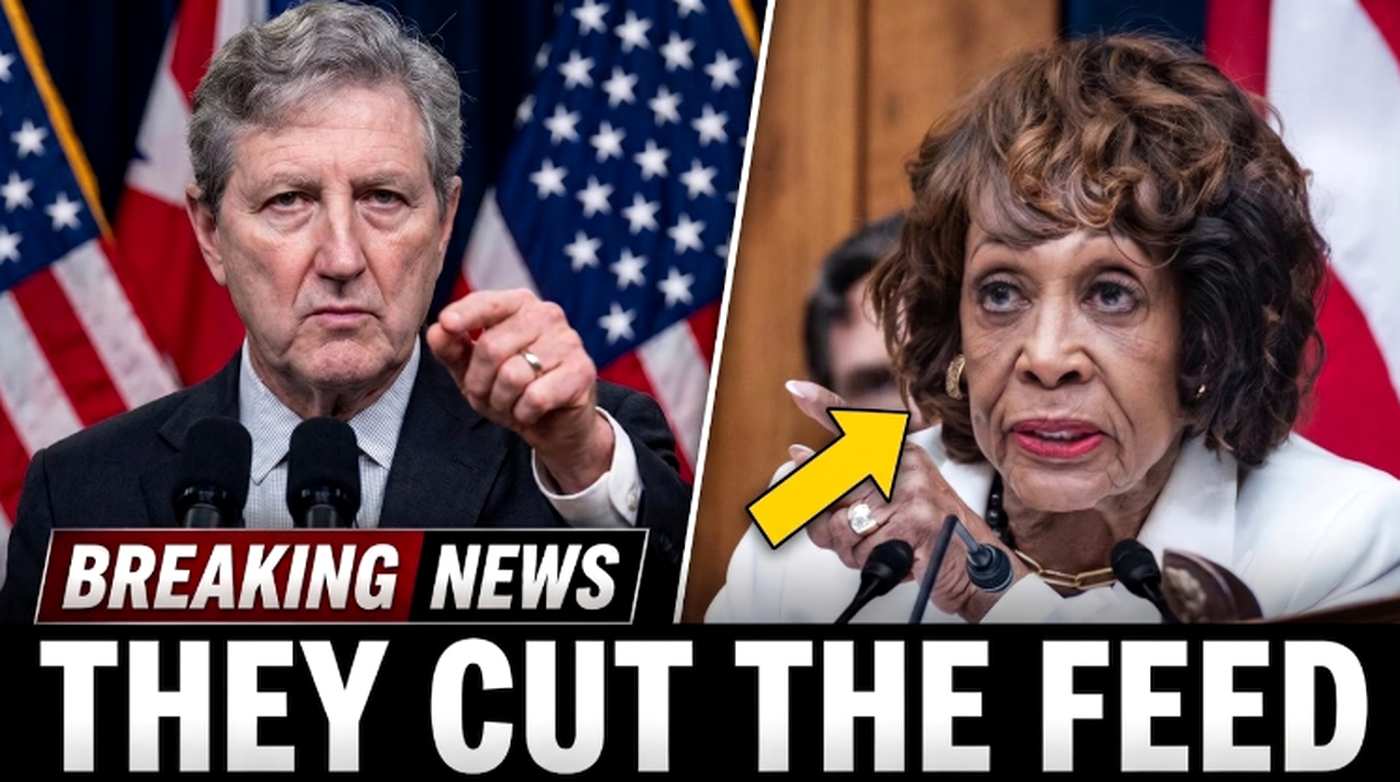
A viral video featuring Senator John Kennedy and Representative Maxine Waters presents that tension as a heated confrontation over inflation, government spending and financial accountability. According to the supplied account, Kennedy challenges the official economic narrative, arguing that the numbers presented by politicians do not always reflect the difficulties experienced by working families.
The underlying concern is familiar: when public officials describe an economy as improving, how should that assessment account for people who still struggle to afford necessities?
Kennedy’s Challenge to Washington’s Economic Narrative
Kennedy has frequently criticized federal spending and the growth of government debt, arguing that policymakers should pay closer attention to the long-term costs of their decisions.
In the confrontation described by the video, he reportedly contrasts economic statistics with the experiences of ordinary Americans. The argument suggests that positive indicators can coexist with serious financial pressure for particular households, especially when housing, groceries, utilities and other essential expenses consume a growing share of their income.
That distinction deserves attention. National economic indicators summarize broad trends, but they cannot describe every family’s financial circumstances. Falling inflation, for example, means prices are rising more slowly; it does not necessarily mean that prices have returned to earlier levels.
For families whose incomes have failed to keep pace with accumulated increases in living costs, the difference can be substantial.
Waters and the Case for Public Investment
Waters has long supported policies aimed at protecting consumers, expanding economic opportunity and maintaining federal assistance for vulnerable communities. From that perspective, public spending is not simply a budgetary burden; it can also provide services and support that households might otherwise struggle to afford.
The disagreement portrayed in the video reflects a broader debate about the government’s economic responsibilities. Critics of expansive spending emphasize deficits, debt and the potential economic costs of poorly designed programs. Supporters argue that public investment and social assistance can help families facing circumstances beyond their control.
Neither position resolves every question. The relevant issues include which programs deliver measurable benefits, how they are financed and whether their long-term costs are justified by their results.
The Human Cost Behind the Statistics
The most affecting part of the video’s narrative is its emphasis on families trying to make ends meet while political leaders debate competing economic explanations.
A household facing rising rent or an unexpected bill may care less about partisan arguments than about whether its income covers the month’s expenses. That experience does not automatically prove that a particular administration’s policies caused the hardship, but it highlights why economic assessments must consider more than headline figures.
Understanding those pressures requires examining wages, household expenses, regional differences and changes in the cost of essential goods. It also requires distinguishing between short-term difficulties and broader economic trends.
A Heated Confrontation—or a Viral Narrative?
The video presents Kennedy and Waters as engaged in a direct congressional confrontation, with Kennedy challenging the economic claims and Waters defending her policy position. However, the supplied material does not include an authenticated transcript or an official hearing record establishing that this particular exchange occurred as described.
The distinction matters because political videos can combine real policy disagreements with invented dialogue or dramatic narration. A memorable quotation cannot be treated as an authentic statement without reliable confirmation.
The available description also does not establish the specific economic figures Kennedy supposedly challenged or demonstrate that either participant conceded the other’s argument.
The Questions That Remain
The broader issue nevertheless deserves serious examination. Economic accountability requires public officials to explain their claims, disclose the reasoning behind their policies and acknowledge the difference between national averages and individual hardship.
Kennedy’s reported criticism raises questions about whether economic messaging adequately reflects the experiences of working families. Waters’s broader policy position represents a different view of how government can respond to those pressures.
Ultimately, the most important question is not which politician delivered the sharpest line. It is whether the policies under discussion improve household security, whether their costs are sustainable and whether the evidence supports the claims made on their behalf.
For families living with financial uncertainty, those answers matter far more than the spectacle of a congressional argument.